Gunner - Driver Ewart Ballard (1907-1982)
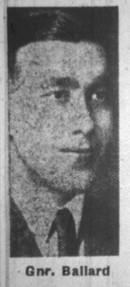
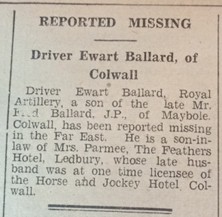
Ewart Ballard was a son of Fred Ballard who in 1939 lived at Maybole on Walwyn Rd. His occupation was listed as “Prospector”. In 1940 he married Marjorie Parmee, whose father had been the licensee of the Horse and Jockey Hotel in Colwall. He volunteered for service in the Royal Artillery in 1940, and was with the 5th Field Regiment when it was sent overseas in the autumn of 1941. He was in North Malaya when hostilities started there, surviving the fighting as they retreated to Singapore. He last cable home was from Singapore on the 1st February 1942. A fortnight later on the 15th February Lt-General Percival signed the largest surrender in British history – 85,000 men. The family heard nothing more until May 1943, when they were informed that Ewart was a prisoner-on-war at Malai Camp in Singapore.
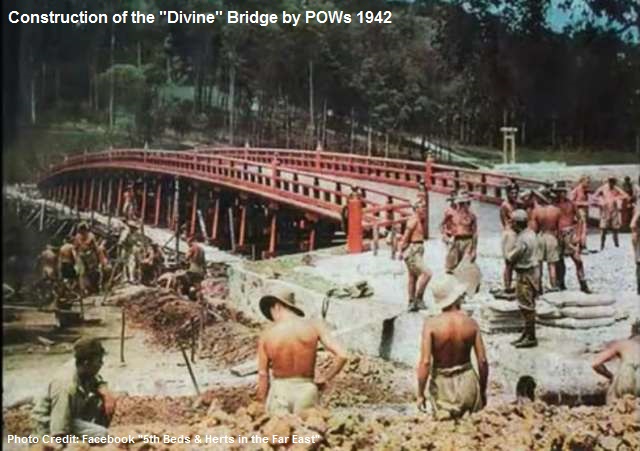
When Ewart was first captured he worked on road-making and he “assisted in the making of a road straight up a hill on which the Japanese erected a shrine to the memory of a large number of their fallen.” It is likely that this was the Syonan Jinja shrine and included the construction of the “Divine Bridge”.
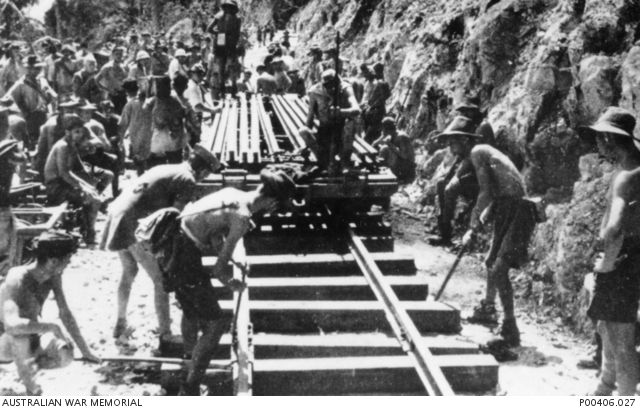
He also worked in a quarry and in April 1943 he was transferred to Thailand to work on the infamous Thai-Burma Railway. Over 12,000 of the 62,000 Allied POW working on the railway died. He worked on the railway until the end of 1943 when he was taken to Syme Road Camp in Singapore where he worked as a mess orderly.
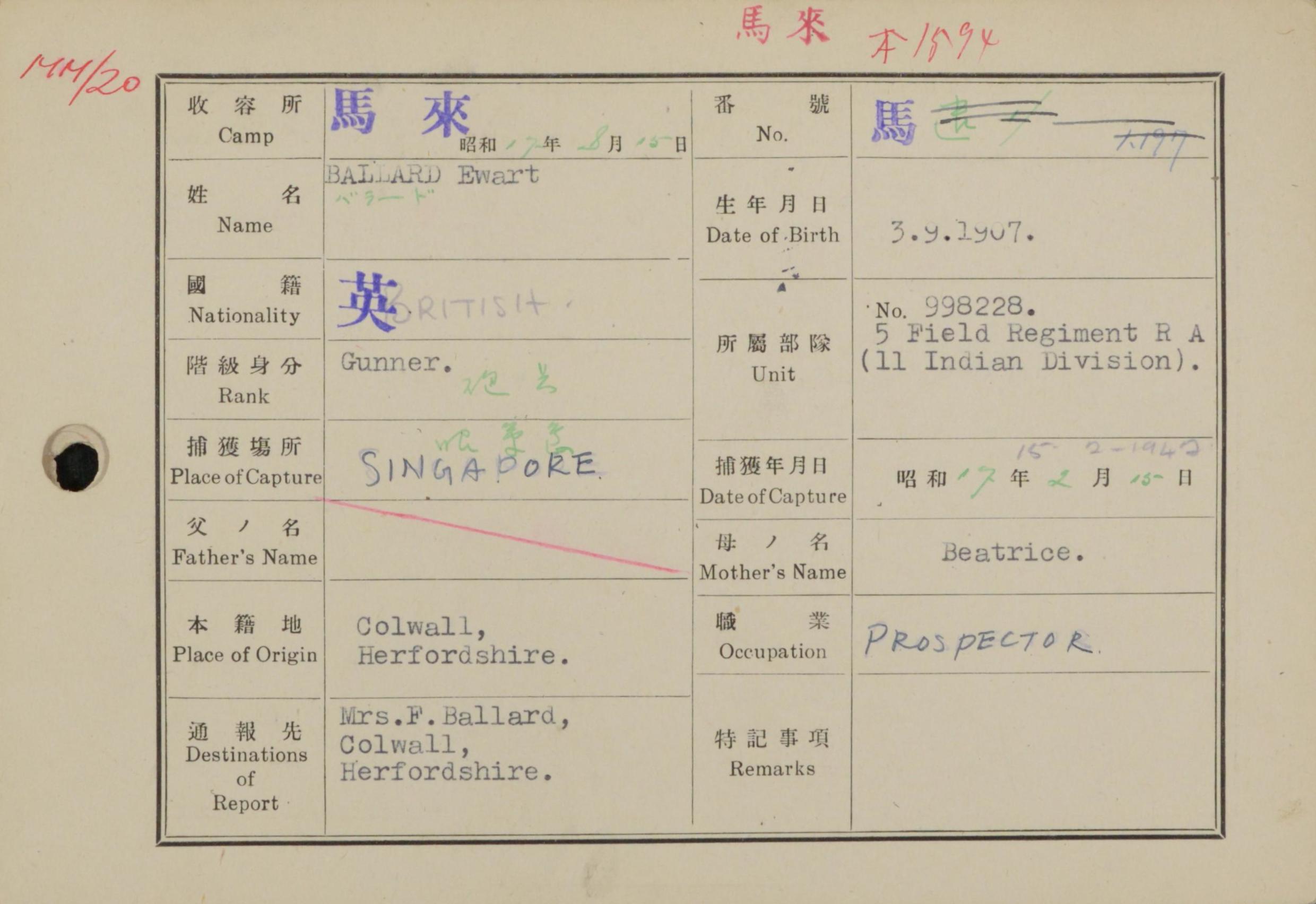
The Ledbury Reporter recounted
"Although he escaped any punishment worth speaking about (as he thinks through
observing the little courtesies which the Japanese demand) he yet suffered great
hardship owing to the shortage of food at all the prison camps at which he was confined.
So scarce was meat that he and his colleagues were glad enough to eat cats, rats,
snakes, and snails, or anything of a like nature which they could capture, and he
recalls that on Christmas Day, 1944, not having tasted meat for a whole year, he had a
meal of dog stew, and thoroughly enjoyed it. They also ate the leaves of a number of
tropical plants as well as boiled grass. Rice was served every day, but so scanty was
the food that during most of the time they were on a starvation diet..”
The Japanese surrendered on the 15th August 1945, but it was not until the 13th September that Ewart finally left Singapore. On the 23rd September 1945, the family received a message from Ewart reading “Arrived Madras, hope to be home soon”. When Ewart had joined the Army he weighed 14 stone 4 lbs, but by the time he left Singapore he weighted only 8 stone 2 lbs due to lack of food, dysentery and malaria. Ewart reached England on the 24th November and met his son Lyn, aged 3½ years, for the first time. He had not been aware of his existence for the first 12 months because there had been no messages from his family.
References
Ledbury Reporter: 1st December 1945Syme Road Camp https://2nd4thmgb.com.au/camp/sime-road-camp-singapore
Syonan Jinja Shrine https://remembersingapore.org/2017/07/16/macritchie-reservoir-syonan-jinja/
Burma Railway https://warfarehistorynetwork.com/article/building-burmas-notorious-death-railway/