Old Colwall Naval Armaments Store
There are two railway tunnels running through the Malvern Hills from Colwall to Malvern Wells. The first tunnel, completed in 1861, was the inspiration of Stephen Ballard and its completion provided a direct route from the coal fields of South Wales to the industrial Midlands. However, by the 1920's its shortcomings had become apparent, in part due to its narrow bore, steep gradient, and substantial growth in heavy traffic. Consequently on the 18th July 1923 Royal assent was given through the Great Western Railway (Additional Powers) Act 1923 authorising the construction of a second Colwall tunnel and associated line realignments. Despite an original intention for the two tunnels to work together, one as an up-line and the other as a down-line, this never materialised and the original tunnel was never used again for main line operations.
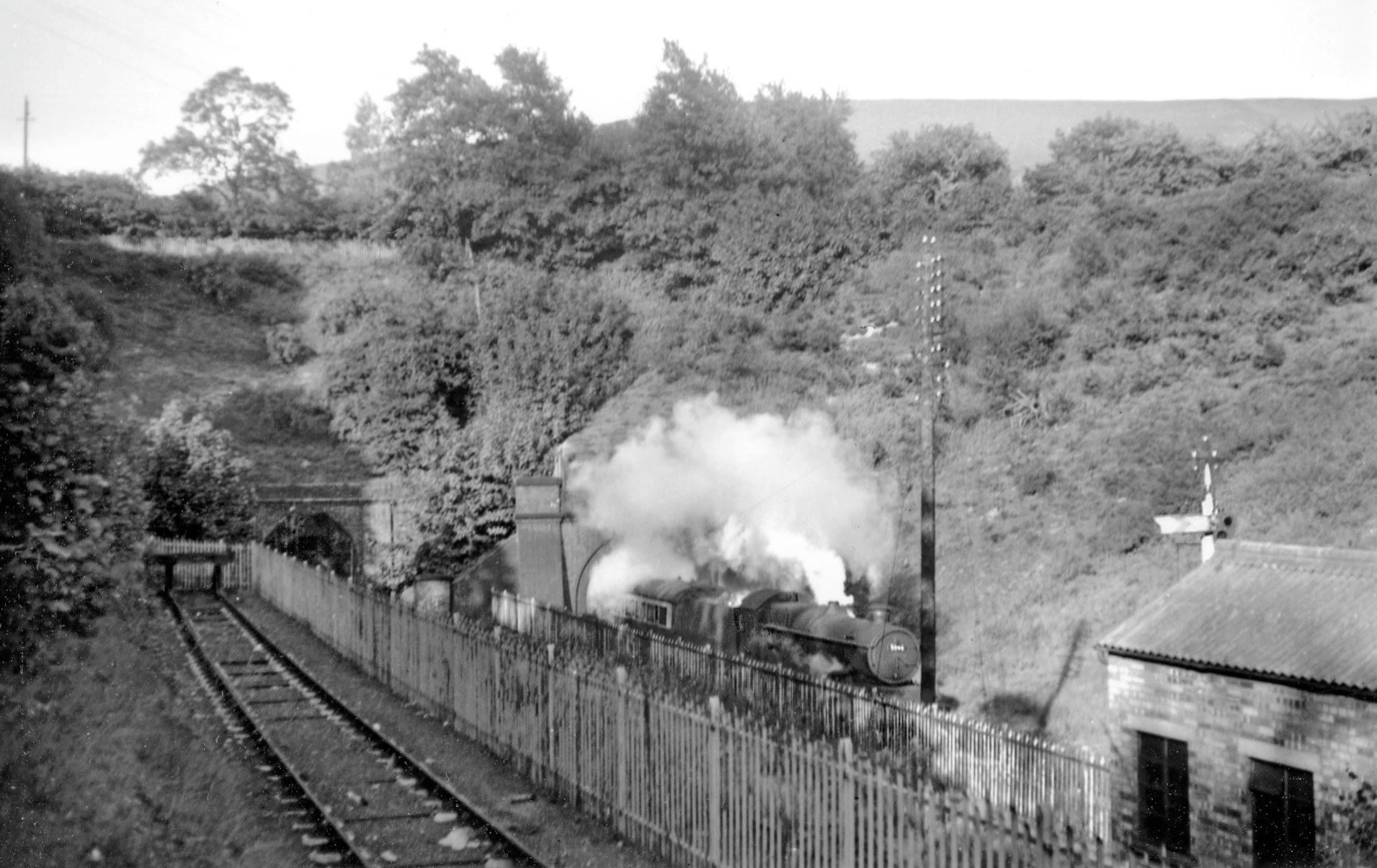
During 1939 the original tunnel was appropriated on behalf of the Admiralty for use as a Royal Naval Armaments Depot (RNAD). As a result, in the autumn of 1939 repairs were made to the lining of the original tunnel and a concrete floor laid. The official title of the RNAD was Old Colwall Naval Armaments Store (OCNAS). During the War what is now the QinetiQ Malvern site was constructed for the Admiralty and from April 1941 to 1946 it was HMS Duke, a naval basic training ship. HMS Duke was commissioned on 27 May 1941, and had a nominal depot ship based at Chatham - a 27-foot (8.2 m) whaler. One of the roles of HMS Duke was to provide personnel to guard and operate OCNAS.
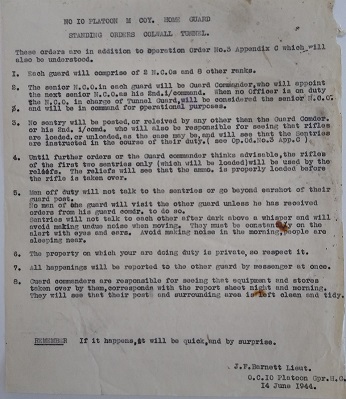
Whilst the Navy were in charge of the security of OCNAS it was the Great Western Railway Home Guard who were in charge of guarding the Mainline tunnel. Standing Orders1 for number 10 Platoon M company Home Guard gives details of the sentry duties to be performed and that 2 Non Commissioned Officers (NCO) and 8 other ranks comprised each guard.
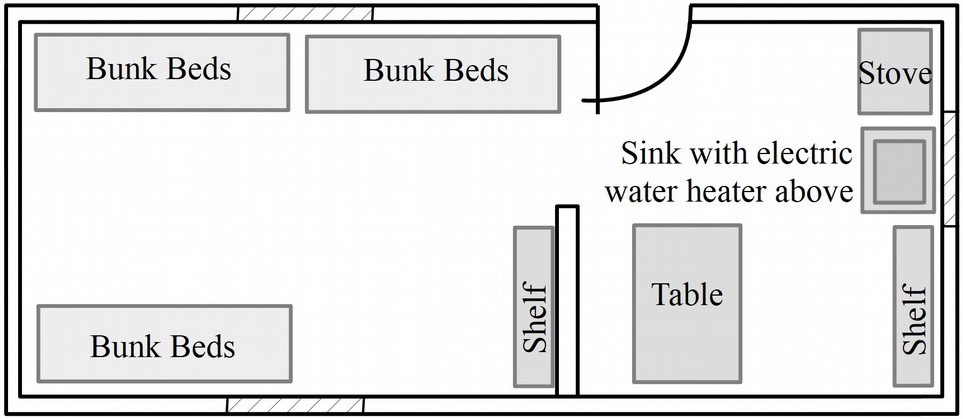
A company of up to forty sailors were stationed at each end of the tunnel to guard it and those on duty were located in a guard house close to each end of the tunnel. For those sailors not on duty, they were housed in concrete barracks at Colwall station located on the embankment opposite the current waiting shelter. Later the barracks were converted into bungalows. A secure fence was erected around the tunnel entrance area and office buildings. A small shed was also constructed at each end of the tunnel to accommodate the locomotives. A diagram of the Guard House at the Colwall end of the tunnel showing the arrangement of the sleeping and living areas.
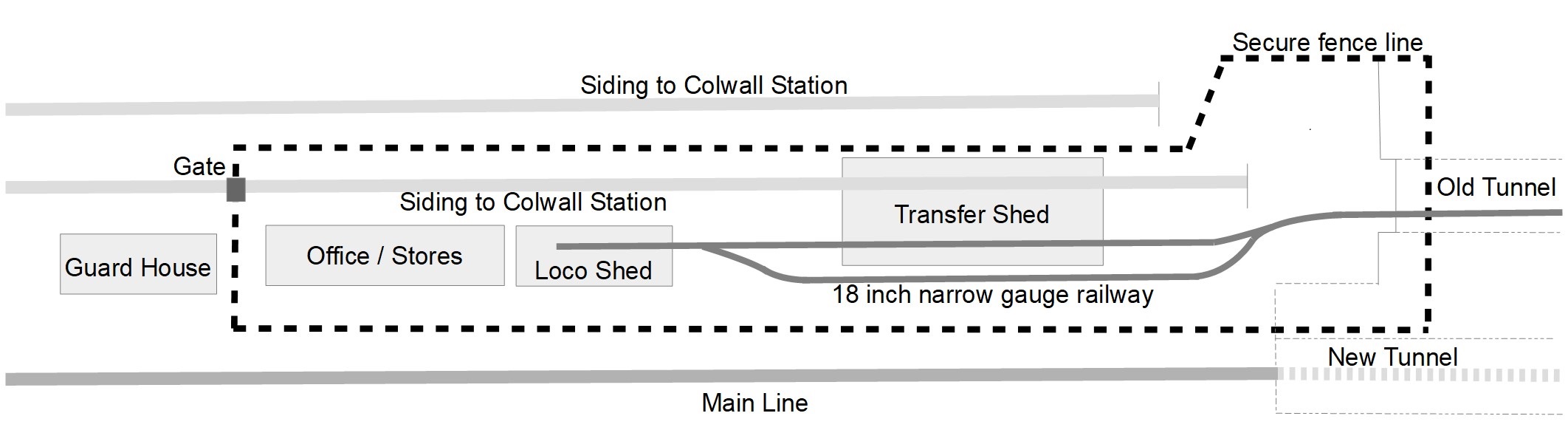
Armaments were normally dispatched within two days of arrival at OCNAS and so the tunnel would have been operated more as a distribution centre than a store. As an aid to the process of placing armaments in store and removing them for use, a narrow gauge (18 inches) railway was laid within the tunnel in 1941, worked by two Ruston & Hornsby 25/30HP diesel locomotives (numbers 200776, and 200777) at a cost of £777.00 each in July 1941. Munitions that were stored in the tunnel included a selection of warheads fitted with TNT and various types of bombs. The munitions were stored at either end of the tunnel, having been unloaded in the Transfer Shed from a wagon on the siding from the standard gauge line at Colwall station onto the narrow-gauge railway and then transported into the tunnel.
Roy Stockton who lived in Shelsey Drive during the War recalls the sound of munitions trains being shunted in the disused railway tunnel under the hills and the noise of the operations could easily be heard at night-time.
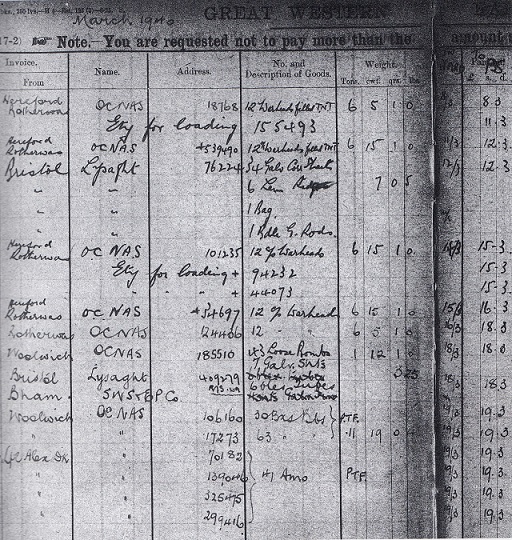
Given that the use of the OCNAS during the War was secret there is very little information available about what went on. However, fragments of an old ledgerhas survived and this implies that many of the armaments came from the Royal Ordnance Factory at Rotherwas, Herefordshire, along with armaments from Woolwich. The ledger shown above shows the arrival of ammunition ath OCNAS between 8th and 18th March 1940. The figures in the third column are wagon numbers. The list includes 12 warheads filled with TNT, 12 cases of warheads and 43 loose bombs.
After the War, the railway was dismantled, the locomotives sent to the Admiralty Depot at Bullpoint, Devon, and the tunnel entrances were sealed with steel sheeting.
References
- Standing Orders Colwall Tunnel contained in 705:876/BA127882/2/2 (Worcester Archive)
- Diagram drawn from detailed plans contained in 705:876/BA8077/22 (Worcester Archive)
- Schematic drawn using data from RAIL788/653 (The National Archive) and 705:876/BA8077/22 (Worcester Archive)
- Rail Through The Hills, by John Boynton, 1995.