Sapper Donald J Wilce (1918 - 1988)
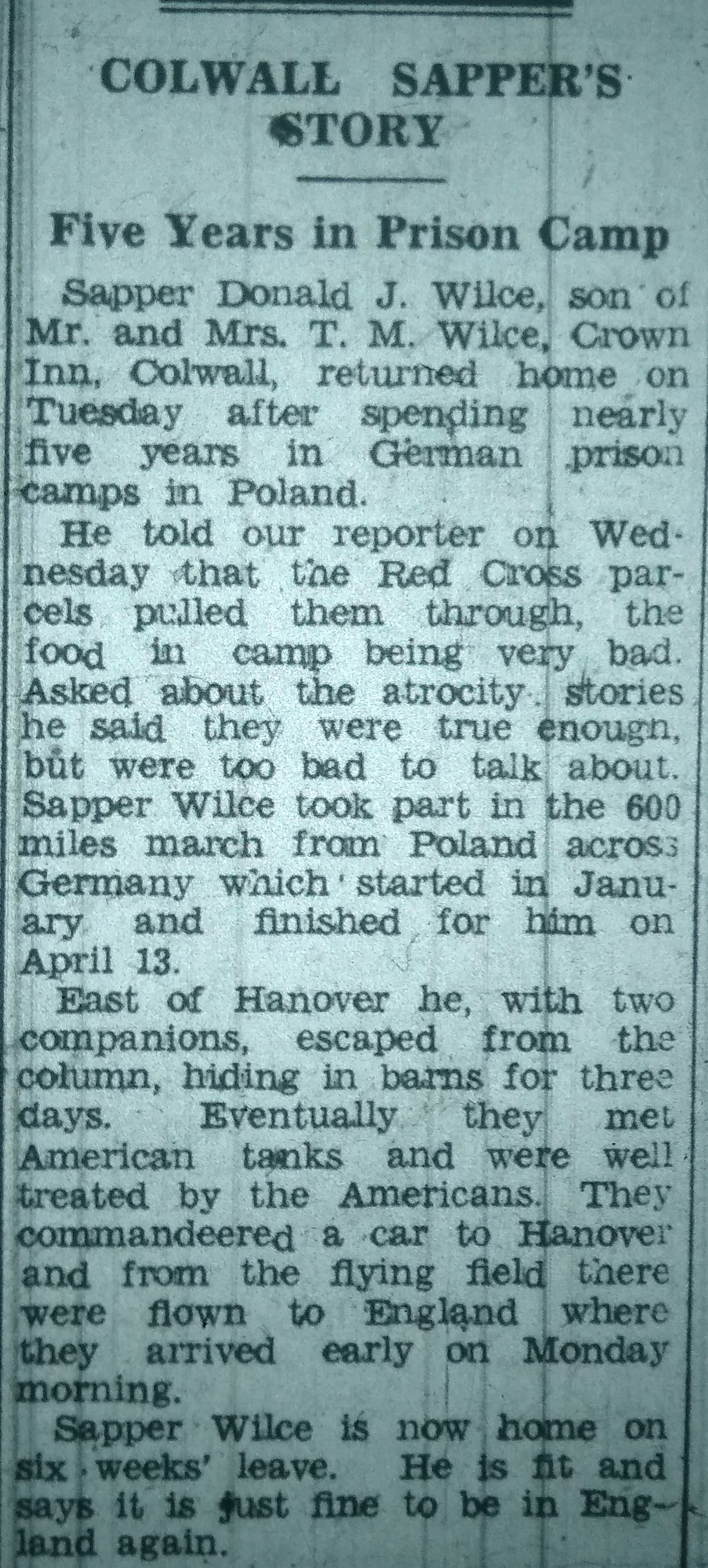
Donald Wilce was born on the 14th October 1918 in Cinderford. In the 1939 Register, he is listed as an Aircraft Apprentice in Gloucester and he was living with his parents, Thomas and Gertrude, who ran the Victoria Inn in Gloucester. Sometime after 1941, his parents moved to Colwall to run The Crown Inn.
By 1940 Donald joined the 1st Field Squadron of the Royal Engineers as a sapper - Service Number 1886438. The Squadron went to France in 1940 as part of the 1st Armoured Division. At the end of May 1940 the squadron was working alongside the 51st Highlanders as they held a defensive line along the Somme whilst the Dunkirk Evacuation was happening.
On the 4th June the 51st Highlanders were charged with recapturing the Abbeville bridgehead on the Somme alongside French forces. They failed with heavy casualties. The Highlanders and French allies withdew to the coastal town of St Valery-en-Caux in Normandy and hoped to evacuate on the 11th June.
However, dense fog meant evacuation was not possible. The French surrended that night with
the Highlanders surrendering the next day. Around 8,000 troops were captured. Like many who
were captured that day Donald was sent to the Prisoner of War camp at
Stalag XXA Thorn
in Poland.

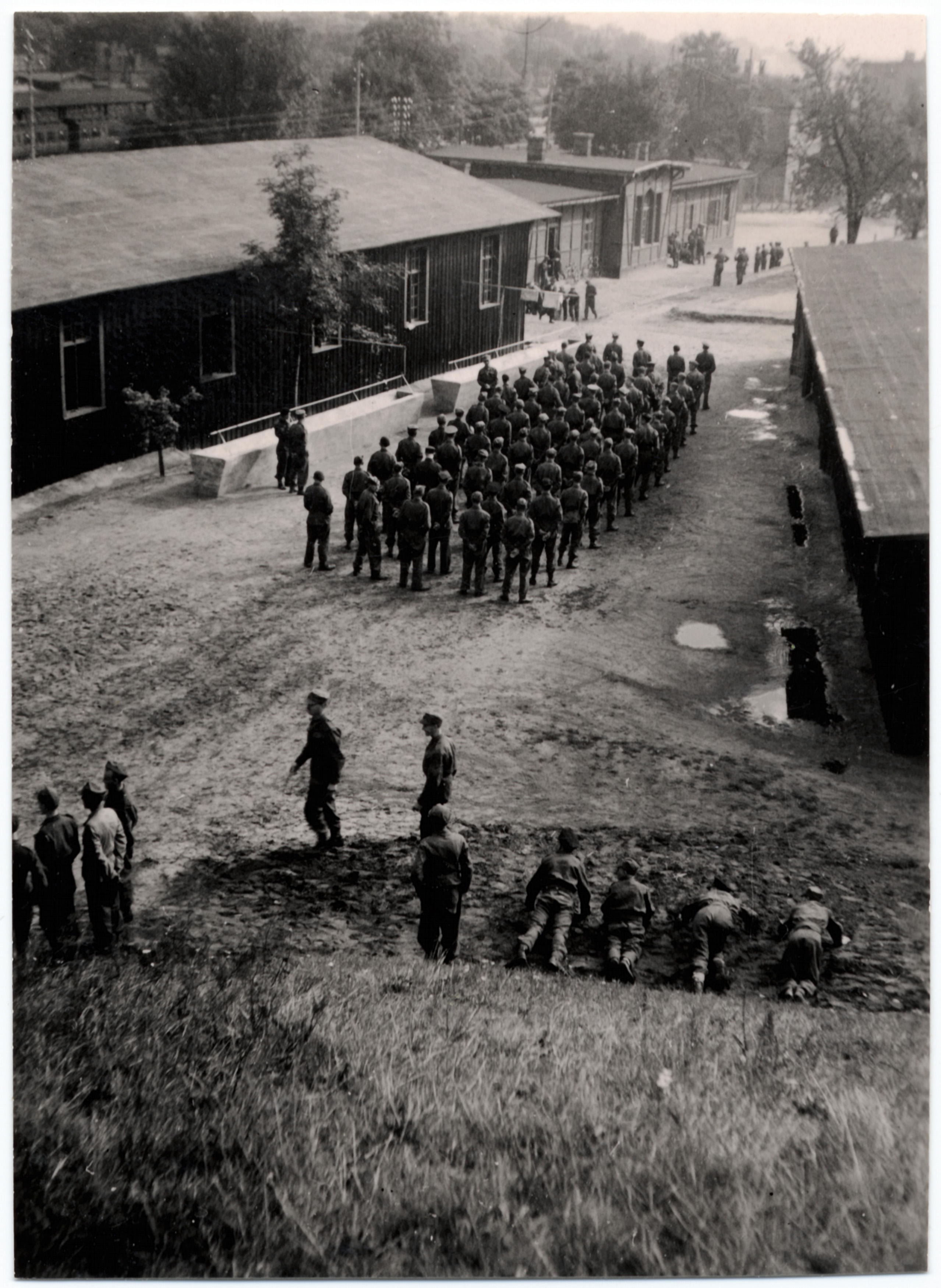
Stalag XXA was a German prisoner-of-war camp in World War II, located in and around Thorn, now Toruń, in Poland. At its peak, in 1944, it held some 20,000 Polish, British, French, Belgian, Serbian, Soviet, Italian, and Commonwealth PoWs. The main camp site centred on a series of eight old brick forts which had been built during Napoleonic times. Prisoners were lodged in what had been the barracks, associated with each fort. Originally, prisoner facilities were temporary and very poor, but by 1942 many purpose built structures had been added, including barracks, administrative buildings, medical facilities, a library and theatres. The camp received parcels and visits from the Red Cross. Photographs of Stalag XXA can be found on the International Red Cross Archives
German resistance to the advance from Russia crumbled in early 1945, and in February of that year the camp was abandoned to the oncoming forces from the east. Marching groups of 100-400 were formed, and the prisoners were marched west towards central Germany. There was much hardship through this march, covering some 25Km per day. Many died due to lack of food, poor clothing and extremely cold weather. Some chose to slip off the back of the march, or otherwise left behind to be overtaken by Russian forces, and (if British) eventually get home. The bulk of the march was finally met in April/May 1945 by advancing American and British forces. Alfred Gray's memory of the March, tie up with those reported by Donald Wilce in the Ledbury Reporter.
After the war Donald married in 1948 and settled in Cheltenham.
References
https://www.wartimememoriesproject.com/ww2/allied/battalion.php?pid=4336https://www.researchingww2.co.uk/field-park-squadron/
https://en.wikipedia.org/wiki/1st_Armoured_Division_(United_Kingdom) https://www.bbc.co.uk/history/ww2peopleswar/timeline/factfiles/nonflash/a1120861.shtml
https://51hd.co.uk/history/valery_1940
https://www.prisonersofwarmuseum.com/camps/stalag-xxa-thorn/
https://avarchives.icrc.org/Picture/5707